It’s an interesting and complex debate. Every artist since time began, including all the great masters, learned their art by copying. They spent years in front of models, statues, fruit, flowers, pots and vases, copying every detail to develop their skills. The art schools had daily demos by well-known artists for students to carefully observe and learn from. Also, students were encouraged to regularly visit art galleries to sketch the work of famous artists. Many artists who were already successful formed groups that painted together and developed completely new styles, e.g. Fauvism, Cubism, and Expressionism.
Copying is how we humans learn most things. We learn by watching, listening, reading, researching, doing, making mistakes, and trying over and over again. But even though copying is fundamentally a good thing, the problem can arise when an artist produces a copy of another artist’s work, claims it as their own creation and sells it for financial gain. However, for this activity to breach copyright rules, the new painting would need to have accurately captured ‘that special something’ that is the unique and specific expression of the original artist. Copyright does not cover common ideas, techniques, or styles that are generic in nature.
Unlike in the days of the great masters, nowadays we have unlimited opportunities online to study other artists’ work. Sites like Pinterest, Etsy and Facebook have millions of artwork images for anyone to view for free, plus almost every art gallery and professional artist have their collections on their websites. This provides a huge source of ideas, skills, techniques and styles that we can try out for ourselves and if we like them, add them to our own ‘creative databank’ to draw upon when we’re creating our artwork. The bigger we build our ‘creative databank’ the more unique and original our artwork can become. Herein lies the key to creativity!
Here’s a tip if you’re using a photo of another artist’s work as a reference for your new artwork. If you don’t want it to turn out looking like a copy of the original, the first thing to do is identify those particular characteristics of the work that link it uniquely to the original artist. On relatively rare occasions, this can be a large proportion of the painting; however, surprisingly, it’s usually just a few things. Then instead of directly copying them…modify or replace them with your own ideas, techniques, shapes, marks and colours, etc. This will really get you thinking and having a ton of fun, and by doing it this way, you were able to be inspired by the original, yet you engaged your own creativity and “made your new artwork your own”.
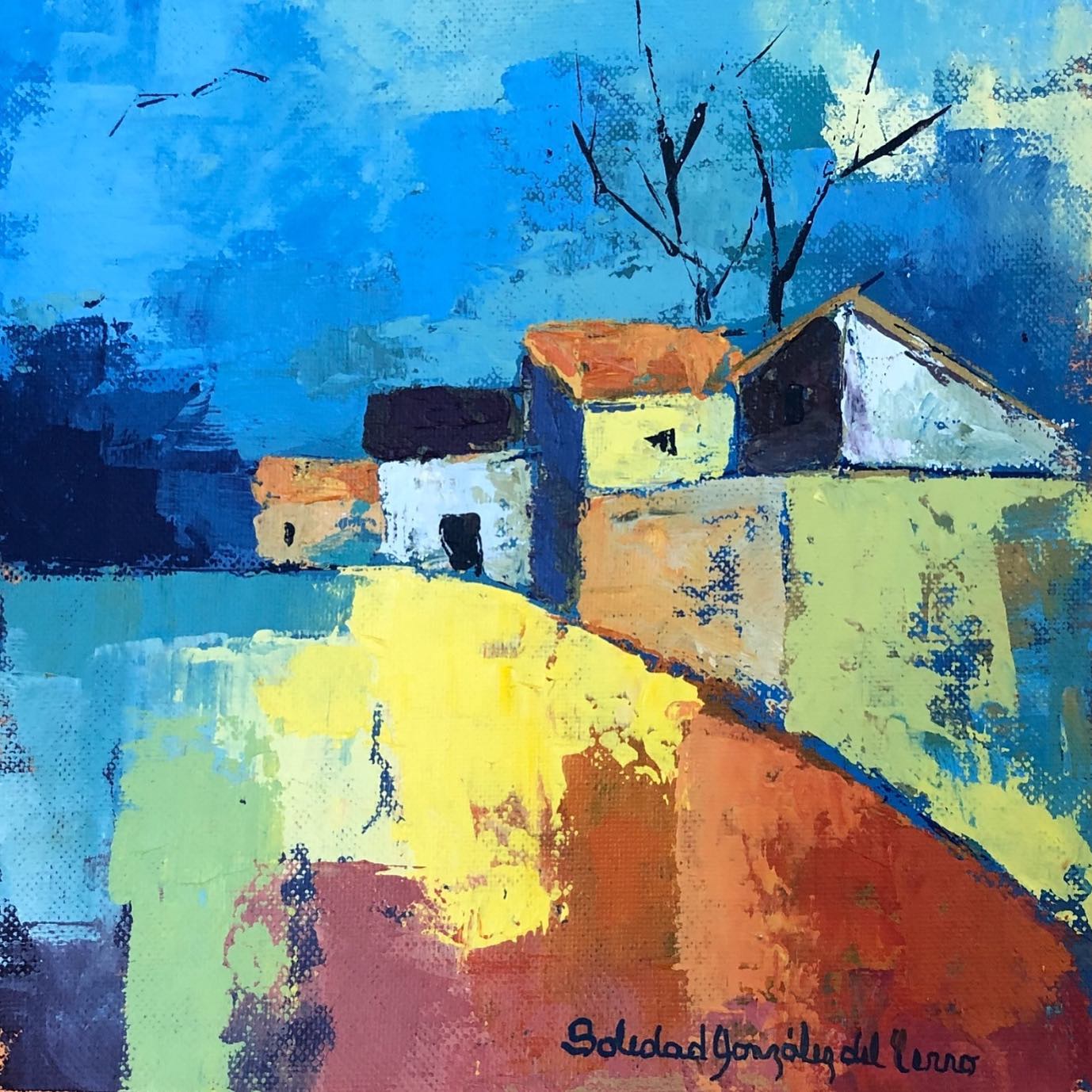
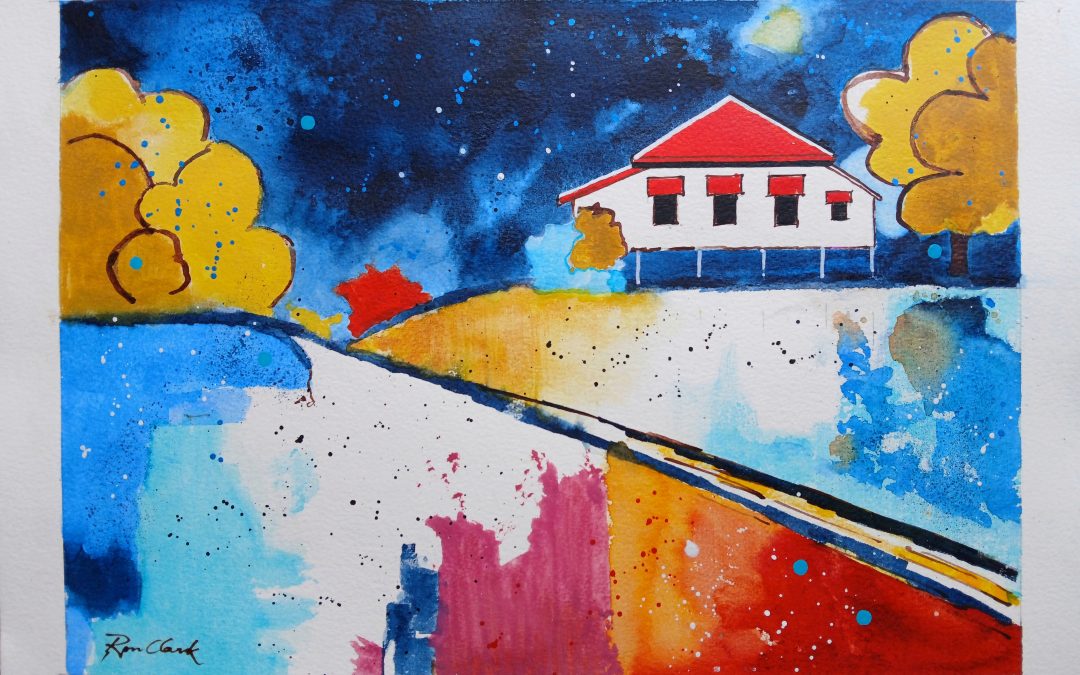
I demonstrate this with these two images above and below. The reference photo was from Pinterest, painted by a Spanish artist named Solidad Gonzalez del Cerro. In my demo, I adopted Solidad’s basic layout but replaced her buildings with my own Cairns childhood memories and added a stormy sky and big clouds.