
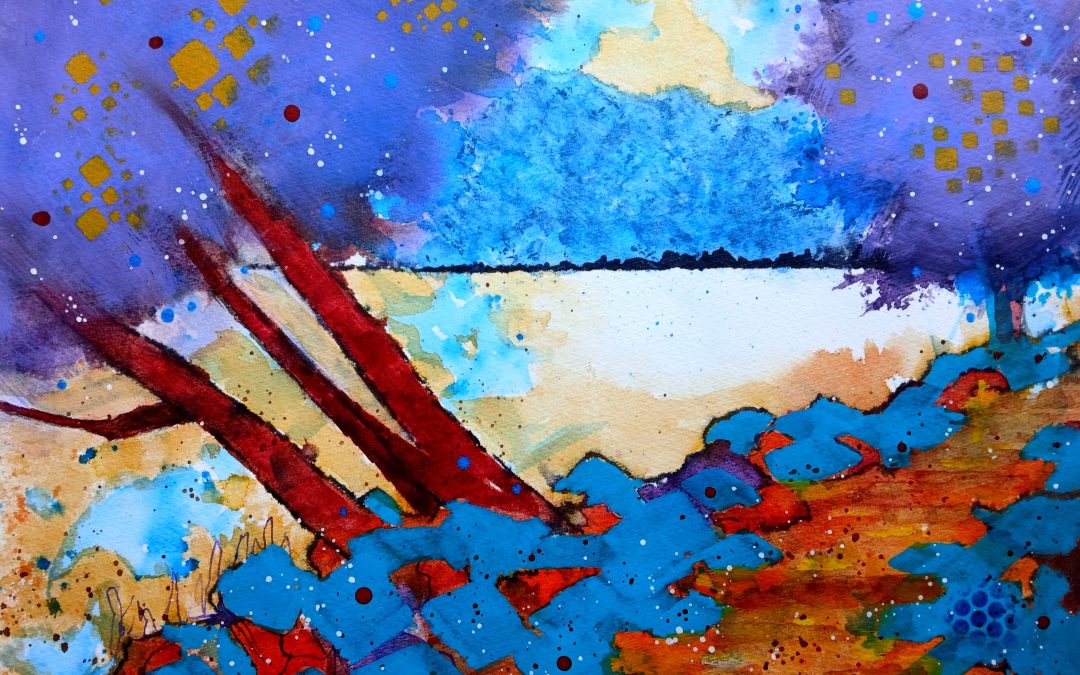
Whatever creative art you do, you will have your own reason for doing it and it helps to periodically ask yourself ‘why do I do art? What is the minimum I hope to get out of it? Well no doubt there are hundreds of different answers to this question. By definition, ‘art is the production or expression of something of beauty, or of emotional power, or ‘out of the ordinary’.’ Art has two parts… one is the process of doing the artwork, and the other is the resulting item of artwork.
Contrary to popular belief, the resulting artwork itself is not the main reason why we humans do some form of creative art. The enjoyment, satisfaction, fulfilment, relaxation, challenge and excitement etc, that we seek as artists, come mainly during the ‘hands-on’ process of making the artwork. That’s when the head, the heart and the hands work together in perfect harmony, using our skill, intuition and passion, to create something from nothing, for the basic purpose of being enjoyed for its beauty, or its emotional power, or its uniqueness. This reality, in effect, makes the ‘process of art making’ much more important to most artists than the end ‘product’ itself.
Of course, it’s a real bonus when the artwork turns out good enough to put on display for all to admire, but many pieces don’t turn out well. There’s always a lot to learn from those failed artworks as they are fundamental to our ongoing development as artists. So in the end the piece may have failed, yet the artist still experienced the fun, enjoyment, challenge and excitement while working on it.
A dilemma that plagues many artists is when they place greater importance on the end result, setting high expectations to produce artworks that will be more likely to sell. This can have the opposite effect, bringing a fear of failure that kills creativity and takes the enjoyment and fun away from the process of art making. The artist is challenged by this and must learn how to ‘switch off’ their commercial aspirations and expectations during the creative activity, or they will struggle to do their best work and may not gain the same enjoyment during its creation.
It makes no difference what style of art you do, anywhere from highly traditional photo-realistic work to wildly abstract work, but what really matters is that you’re adopting a playful approach, having fun and enjoying the dream in each moment of the art making process. Your best work will come naturally when your head, your heart and your hands are quietly working together in that sublime space. “As you dream, think more about the act of creation than the outcome.” (from Paul Gauguin’s letter 1888)